News
News > Extract
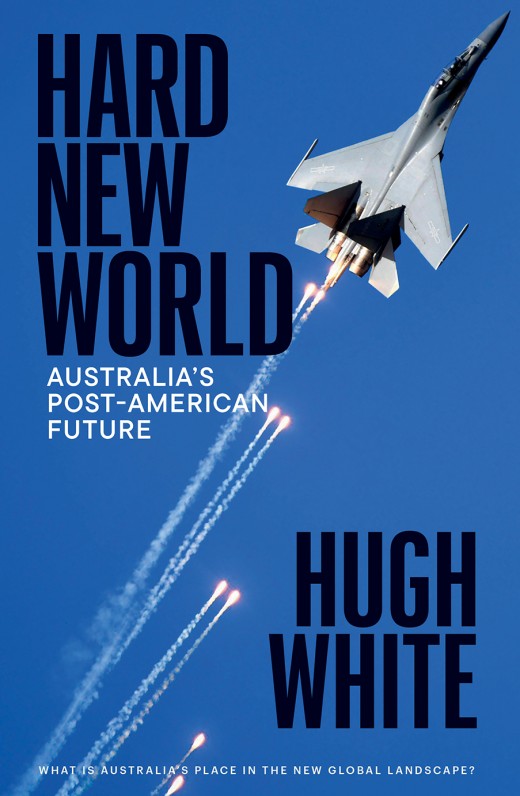
Read an extract from Hard New World by Hugh White
Are we ready for our post-American future? In an era of rising danger for all, and dramatic choices for Australia, Hugh White explores how the world is changing and how Australia should respond.
FAREWELL TO THE RULES-BASED ORDER
Canadian prime ministers seldom make world headlines, but Mark Carney did in January 2026 with a speech to the World Economic Forum in Davos. His message was simple and powerful. The so-called ‘rules-based order’ under US global leadership was ‘a pleasant fiction’, and a dangerous fiction at that. It was supposed to protect the rights and interests of all states, large and small, ensure peace and promote ever-closer global integration. The reality, Carney said, was that the world’s great powers did as they wished, trampling the interests and values of smaller powers for their own advantage. And, he suggested, America under President Donald Trump was just as bad as the other great powers. He called on the rest of us to stop pretending that this was not so. He said that those who still believed, or pretended to believe, in the rules-based order were ‘living within a lie’. They may find it easy, he warned, ‘to go along to get along. To accommodate. To avoid trouble. To hope that compliance will buy safety. Well, it won’t.’ For the first time, the leader of a major Western country had said out loud what everyone else was thinking but was too timid to say.
He might have been speaking directly to Anthony Albanese. No country in the world has more loudly or consistently declared its commitment to US global leadership and the rules-based order than Australia. Supporting this vision has been the central organising principle of our foreign and defence polices since the end of the Cold War. As prime minister, Albanese has been as committed to it as any of his predecessors, as he demonstrated when, within hours of winning office in May 2022, he flew to Japan to meet President Joe Biden at the summit of the Quadrilateral Security Dialogue (‘the Quad’) – the rules-based order’s cheer squad in Asia. But Biden is gone, and Trump in his second term has proved even more distasteful, disruptive and destructive than ever. That makes it hard to keep defining Australia’s place in the world with reference to Washington, and not just as a question of policy. There is a political dimension too. Australians do not like Trump, and they do not like leaders who pander to him. So Albanese tentatively welcomed Carney’s speech, and invited him to address our parliament in Canberra.
Yet Albanese might well have reflected that it is easy for a Canadian leader to speak truth to American power in the way Carney did. On one hand, Trump has treated Canada much worse than he has Australia, directly assaulting Canada’s interests and even impugning its independence. But alone among America’s Western allies, Canada need never fear that America will abandon it. Canada sits in America’s hemisphere, and right on its border. In the most direct and physical way, its security is inextricably bound to America’s, because any military threat to Canada is a direct threat to America too. Canadians might conceivably be invaded by their southern neighbour, but they will never be abandoned strategically.
Australia is very differently placed. Behind the sentimental rhetoric of mateship and shared values lies a simple fact: we have always been America’s most marginal ally, geographically and strategically. We are a long way from America, and from places that matter much to America, so its stake in our security is correspondingly fragile. That is why, as Allan Gyngell so plangently put it, ‘fear of abandonment’ has framed our foreign policy since before Federation. This fear was easy to put aside when America was strong, our Asian neighbours were weak and Washington’s commitment to global leadership was unquestioned. But none of that is true anymore: China’s power is growing, and India and Indonesia are becoming stronger too, while America’s interest in our region is fading. US support for our security is becoming a lot less certain just as our declining relative power makes it harder for us to look after ourselves.
This is Albanese’s, and Australia’s, fundamental foreign policy problem, and Donald Trump has made it impossible to ignore. In the age of Trump it is no longer credible to keep proclaiming, as Australian leaders have done for so long, that America is the guardian of global order, the essential foundation of Asian stability and the ultimate guarantor of Australia’s security. Albanese seems to half understand this: witness his uneasy embrace of Carney’s remarks. But at the same time Albanese and his colleagues remain convinced that we have no choice but to keep relying, and indeed to rely even more, on America for our security as China grows stronger. That is, after all, the strategic logic of AUKUS. So they find themselves entangling Australia even deeper with America while they surely know that America is becoming less and less dependable. It is a problem as profound and consequential as any we have faced in our history. It has been coming for a long time, because its roots go much deeper than Donald Trump. And for a long time we – both our governments and the Australian community – have been wilfully ignoring it. But with Trump in the White House that is no longer possible. We may end up being grateful to Trump for that, at least.

About the author
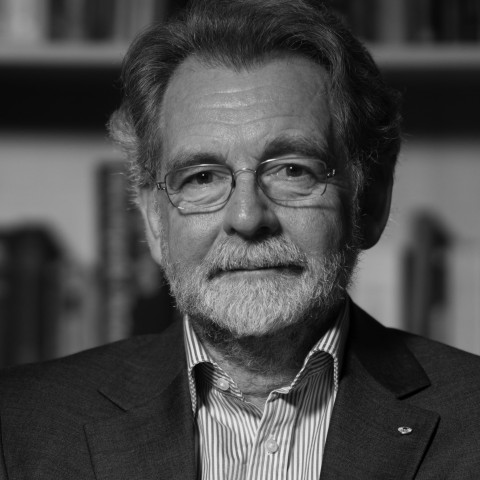
Hugh White is the author of The China Choice, How to Defend Australia and four acclaimed Quarterly Essays. He is an emeritus professor of strategic studies at ANU and was the principal author of Australia’s Defence White Paper 2000.
More about Hugh White
Buy the book