News
News > Q&A
Q&A with James Boyce, author of Origins: The Making of Australia, 1788–1825
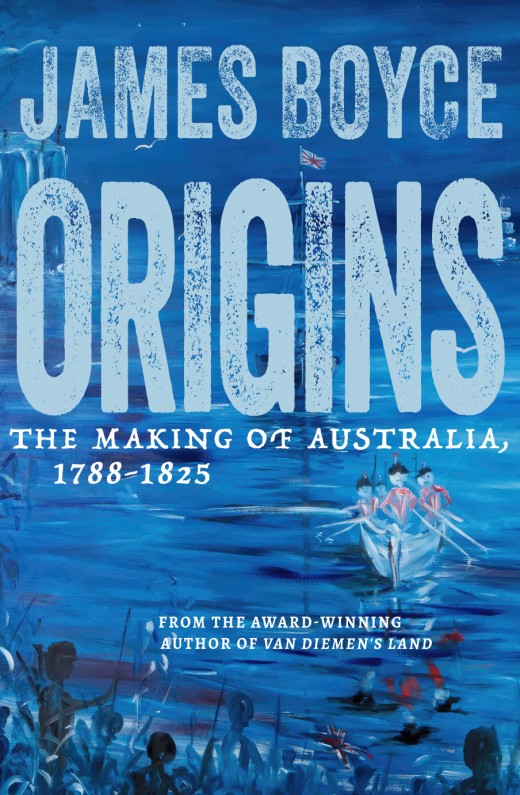
Multi-award-winning historian James Boyce joins us to discuss common misconceptions about history, what it means for a country when its origin story is incomplete, and his forthcoming book, Origins: The Making of Australia, 1788–1825, out 17 November 2026.
This is your first book on Australian colonial history since 1835. What drew you back to this period, and to the very beginning?
The research required to engage seriously with the colonial history of our country, which is so recent and so intertwined with the present, always comes at a cost. After I had spent over a decade working to complete Van Diemen’s Land and 1835, there was nothing more I was able or needed to say. In retrospect, though, I can see that my work since then has been a preparation for Origins as it has helped me more fully engage with the British inheritance –its religious and philosophical underpinnings and especially the tradition of the commons. Oddly, I was drawn back to Australian history by my interest in the Hebridean childhood of Lachlan Macquarie, but while the idea of a biography of him petered out, over seven years the project took on a life of its own as I became immersed in the first decades of colonization. I can never properly explain how a book subject is chosen (there is always a mysterious sense that it chooses me!), but creation stories and origin myths have always been a source of fascination. We saw their potentially dangerous power on full display in Australia during the Voice Referendum. And the pilgrim fathers are rolled out almost every day in Trump’s America. Such is my own obsession with origin stories that I even wrote a book on the legacy of Adam and Eve!
What's the most persistent myth about the first settlers, and why has it lasted so long?
Probably the most persistent myth, because it is found both in celebratory stories and critical histories, is that the first British settlers were modern people –shaped by an industrial economy and the mindset of the enlightenment, and were thus unchanged and unchangeable by their encounter with the people and environment of the country they invaded. It persists because while this cultural stereotype was true of only a small proportion of the settler population – the officers and elite free settlers, these were the people writing reports, letters and books!
Origins describes an encounter between two groups of dispossessed people, convicts and Indigenous people. What did that encounter look like?
There were many stories over time and across different First Nations. I try and tell some of them, including for example the first major migration of Britons by vagabonds known as sealers. The Dyarubbin/Hawkesbury has its own story, so would Lutruwita/Van Diemen’s Land. Always there was the potential for conflict, and sometimes convict colonisers engaged in atrocities (I argue that the convicts probably unleashed the first smallpox epidemic) but in the first decades, exiled men and women seeking freedom from magistrates and masters, often without guns or the protection of the state, generally had a strong incentive to reach an agreement with local landowners. Utilising natural resources also required innovation and adaptation, and who better to learn from than the local people?
Land is central to Origins. Why is it the key to understanding how Australia began?
Access to land and its resources has shaped the lives of almost all people across all cultures until very recent times. The enclosure of the common lands of Britain and Ireland was proceeding apace during the late eighteenth century but in New South Wales, access to common resources could be restored for convict exiles if they could understand the country and reach some understanding with its people. This comparatively slow but deeply transformative adaptation was unintentionally facilitated by the first British government land policy which conceived of a society made up of emancipist peasant proprietors. But land was also the source of profit, power and privilege, and when London turned its attention to reforming New South Wales after the defeat of Napoleon, they began to rapidly enclose the First Nation grasslands of the Colony on behalf of a small elite of free settlers. This tumultuous policy change is a major theme of Origins because the choice made to radically reform land policy in the early 1820s not only dispossessed First Peoples with unparallelled speed and brought ruin to the smallholder; it ultimately shaped a nation.
Was there a person or moment from these years whose story you think deserves to be far better known?
There are many groups that deserve to be better known but we rarely have much record of their individual lives. Some of the groups I consider in the book are First Nations emissaries, fighters and diplomats (who were often women); convict explorers, nomads and hunter/gatherers; healers, carers and midwives; and children, white and black, who in the first decades sometimes grew up together. This list could easily be extended but it is rare to have a powerful white man who deserves to be better known. However, in early British Australia there is the standout example of John Thomas Bigge, the man who conducted the first, and what still remains, the most influential Royal Commission in Australian history. Australians are experiencing the ramifications of the inquiry undertaken by Bigge to this day.
What happens to a country when its origin story is incomplete
While an origin story will always be incomplete, the danger is that it becomes fixed, an unquestioned mythology that either perpetuates injustice and prejudice or loneliness and disconnection. We need to continually revise and revisit the foundational story of who ‘we’ were, so as to keep an open mind concerning who we might now become.
What do you hope Origins adds to how Australians understand their own history?
I hope we can move beyond detachment from the past and see and feel the enormity of what occurred on this continent – more willing and able to probe the unfathomable depths of pain and possibility hidden with the story of Australia’s extraordinary founding. This sentence from the introduction of Origins perhaps states my starting point best: “Foreign colonisation had an earth-shattering impact on First Peoples and the wondrous country they managed, but the widespread assumption that first settlers were not also profoundly shaped by the people and environment of what we now call Australia is a legacy of imperial arrogance.” In other words, while we need to honestly confront what the 1788 invasion did to Aboriginal people, we also need to grapple with what Australia’s origin story has meant for everyone who settled here.

About the author
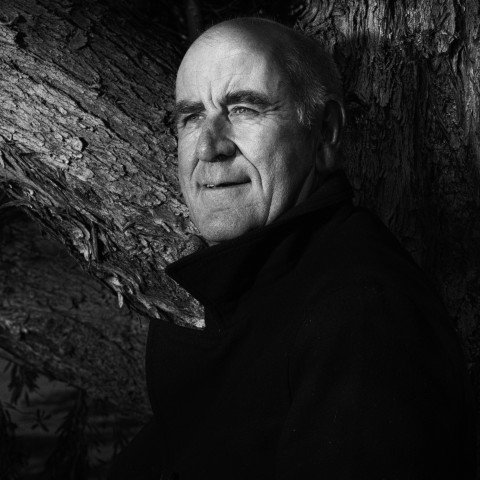
James Boyce is a multi-award-winning historian. His first book, Van Diemen’s Land, was described by Richard Flanagan as ‘the most significant colonial history since The Fatal Shore’. He is also the editor of Inga Clendinnen and the author of Losing Streak, Born Bad, Imperial Mud and 1835, which was The Age’s 2012 Book of the Year.
Author photograph by Matt Newton
More about James Boyce
Buy the book