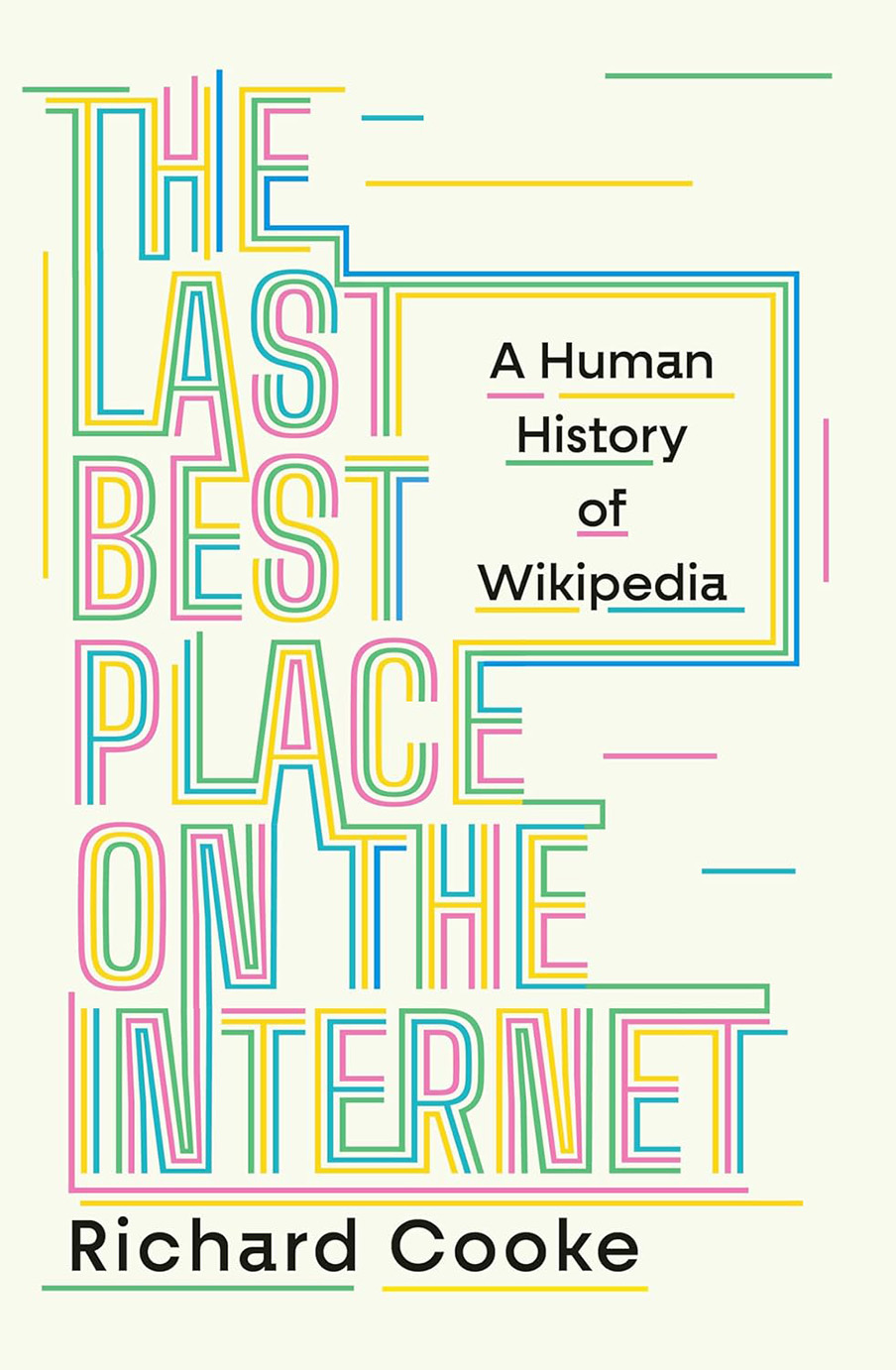
‘Most people who rely on Wikipedia today know little of its beginnings. This book recovers those origin stories with fresh detail and narrative flair, and shows why they still matter in the age of AI.’ —Joseph Reagle, Associate Professor of Communication Studies at Northeastern, author of Good Faith Collaboration: The Culture of Wikipedia.
‘If you questioned why ordinary people turned out to be the best experts to write humanity’s last great encyclopaedia―read on. A wonderful book about a wonderful invention.’―Danny Dorling, author of Slowdown
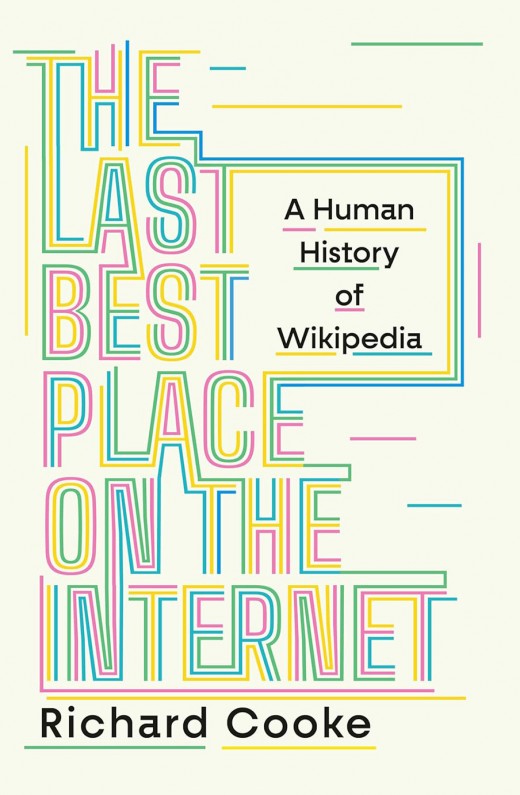
‘Expertly reported, alive with fascinating details, and written with remarkable narrative flair, The Last Best Place on the Internet is a powerfully engaging work of non-fiction about a subject whose monumental vastness has been hiding in plain sight for years.’ —Mark O'Connell
‘With his soaring gift for synthesis and close eye for detail, Cooke’s latest is a rare example of the magic that happens when the right author finds the right subject at the right time. Impeccably researched, highly entertaining and deeply relevant.’ —Sarah Krasnostein
‘Drawing on extensive research and interviews, Cooke explores Wikipedia's origins and evolution, its profound cultural impact, an interesting cast of characters (from passionate volunteers to pedants, hoaxers, and cranks), and its sheer profusion of information ... Cooke leaves no stone unturned, and the result is a wide-ranging, eye-opening, and entertaining survey of the weird and wonderful world of Wikipedia.’ —Library Journal (starred review)
‘A book that presents Wikipedia as a truly human cybernetic institution has to show humans in all their complexity. Here, their – our – creation is shown in all its intelligence and idiocy, all its public-spiritedness and cliquishness, its unpredictability and its reliability. This book argues with wit, citations and some ‘original research’ that Wikipedia is us at best and worst. Lost in an internet that is increasingly made up of algorithms trained to appeal only to our worst, Cooke demonstrates that Wikipedia has become an unexpected bastion against the advance of inhuman slop.’ —Owen Hatherley, author of The Alienation Effect and Walking the Streets
‘An invaluable peek into the history of the modern world at a very crucial time in our information landscape. Cooke navigates the politics, the prose, and the philosophy of knowledge with wit and candour, giving me a cautiously optimistic feeling about the future.’ —Aleks Krotoski, author of The Immortalists: The Death of Death and the Race for Eternal Life
‘If you questioned why ordinary people turned out to be the best experts to write humanity’s last great encyclopaedia – read on. A wonderful book about a wonderful invention.’ —Danny Dorling, 1971 Professor of Geography, University of Oxford UK.
‘Wikipedia is a vast labyrinth of weird characters, an improbable history and endless fascinating rabbit holes. In this rollicking read Richard manages to capture its complexity, rigour and humanism, as well its whimsy.’ —Bunty Avieson, Senior Lecturer in Journalism and Media, University of Sydney
'Like the universe it seeks to document, Wikipedia is seemingly infinite, but The Last Best Place on the Internet rises to the considerable challenge of taking its measure. Richard Cooke's new book is an elegant, judicious, and often very moving investigation of what he rightfully describes as "one of the twentieth century's most consequential ideas." The ultimate wiki rabbit hole (a term with its own Wikipedia page), stuffed with delightful surprises.' —Lance Richardson, Pulitzer Prize finalist for True Nature: The Pilgrimage of Peter Matthiessen
‘Richard Cooke tells Wikipedia's history through vivid storytelling that is vast enough to capture the project's scale and precise enough to explain the people, technology and norms that hold it together. His sharpest claim is also the most moving: Wikipedia may be the last encyclopedia, but the human process behind it - messy, cross-national, riddled with argument - will be its lasting legacy.’ —Professor Heather Ford, author of Writing the Revolution: Wikipedia and the Survival of Facts in the Digital Age
‘I'll be upfront - I'm a proud paid-up member of Wikipedia. I love it and I want to pull my hair out when school students are told 'don't trust wikipedia' - bloody hell, it's one of the few places on the Internet they can trust! Cooke's right - it is the last, best place on the Internet - foibles and all. This is a riveting read on one of the few things that we, as a global society, have collectively helped create on the 'world wide web' - and I'm immensely grateful to Cooke for the journey’ —Anna Krien, author of Night Games
‘The Last Best Place on the Internet is a tale of idealism and absurdity, of grand endeavours and petty squabbles. Cooke's approach is rigorous, his palette expansive, and the insights he makes are rich and provocative. Befitting his subject, this is a book of entertaining and diverting rabbit holes, whose every turn illuminate in crystalline prose a cathedral of knowledge, folly, and human ambition. This is an elegy and a triumph.’ —Patrick Mullins, author of The Stained Man
‘Brilliant conceived and beautifully told: the inside story of an unprecedented act of "collective cultural creation" -- the last encyclopedia human beings will ever write. A digging exercise in the archaeology of knowledge, Cooke's timing is perfect as the foundations of truth come under accelerated and automated attack.’ —Paddy Manning