News
News > Extract
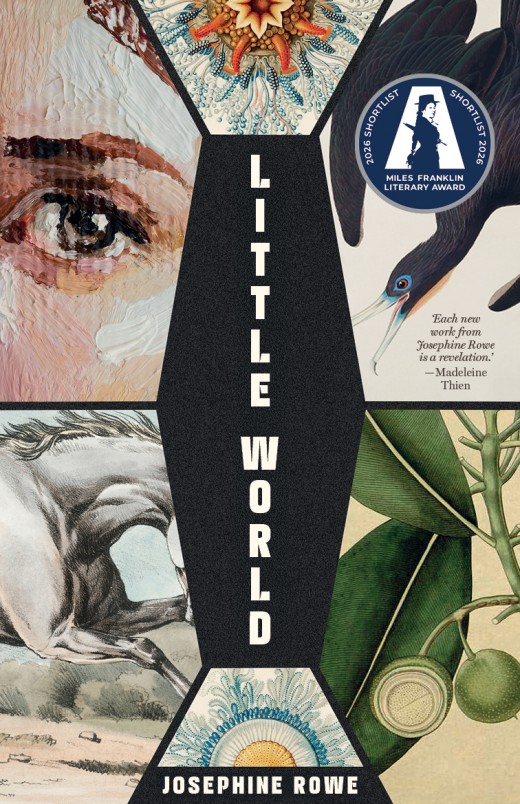
Read an extract from Little World by Josephine Rowe
From one of Australia’s most celebrated literary voices comes a luminous and deeply original novella. In Little World, Josephine Rowe weaves together lives across continents and decades in a haunting tale of faith, memory and the mysteries that shape us.
TAMANU
The saint is nameless when she comes to Orrin Bird. By horse float, of all things. Though he cannot say what other mode of transport might have been more appropriate, given circumstances. She could hardly have come by rail, accompanied or otherwise. He supposes she might have come by hearse. Though hearses are scarce enough out here, and to receive a casket, a box of any kind from such a vehicle, would have brought attention, prying in the guise of condolences. In fact, condolences are not unwarranted—his old friend, Kaspar Isaksen, is gone, has finally drunk himself to death, and left Orrin custodian to a saint.
Bequest is how she is written up, by Isaksen’s solicitor, in the letter that preceded her arrival. The saint had been nameless, even when she’d come to Kaspar. Removed from whatever place she had been kept and cared for, for however long, and where she was presumably entreated by name, one that was lost now. How had she come to Kaspar, on that speck of phosphate in the Central Pacific? Likely no respectable avenue.
Canonisation unverified, the letter notes. Then goes on to submit that an incorruptible body, delivered of all evidence of earthly violence and earthly suffering, was still typically considered grounds enough for beatification. Beatification, at the least.
How near or far this places the child from official sainthood, he has no idea. A maybe-saint, a novitiate, a fledgling? The letter is appendixed with a seven-page inventory mounting evidence towards divinity, a litany of saintly characteristics, attributed miracles, the observation of various phenomena—a heady, floral aroma, believed to be the odour of sanctity; attestations to several instances of the eyes appearing to open or close, especially around the solstices. And, on one occasion, the weeping of pink-tinged tears, which were swiftly gathered in a glass lacrimarium, and later blended with chaulmoogra seed oil to create a curative of remarkable potency, alleviating the symptoms of lepers across disparate colonies.
Orrin—not devout, or not in a Catholic sense—is conflicted about the nature of this legacy. He has no notion of how to care for a saint. Even a small one. Does not even believe. Not in any one God, attended by angels and casting His divine judgement down from On High. If he has gods, they are many, and they themselves tend—are the kind who get their hands dirty and wet, who are the Dirt and the Wet. And yes, the Dry. Terrible Dry, who doubtless has no comprehension nor will towards terror. Just is. As are the gods Salt and Reef and Ant Mound. The birds who tell him whether he is or isn’t home.

About the author
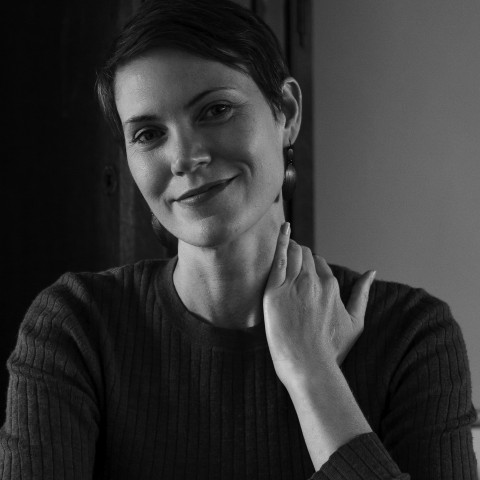
Josephine Rowe is the author of three story collections and two novels, including A Loving, Faithful Animal, longlisted for the 2017 Miles Franklin and selected as a New York Times Editors’ Choice. She has twice been named a Sydney Morning Herald Best Young Australian Novelist, and her collection Here Until August was shortlisted for the 2020 Stella Prize. Rowe holds fellowships from the Wallace Stegner Program at Stanford University, and the Dorothy and Lewis …
More about Josephine Rowe
Buy the book