News
News > Extract
Read an extract from The Shortest History of Egypt by Maria Golia
Egypt is historically the most photographed, studied, fictionalised and commoditised place on Earth...
Its name conjures everything from pyramids and camels to scorpion kings, tomb raiders and revolution. Spotlit in the Torah, Bible and Quran, the country figures in the foundational myths behind the beliefs of a large swathe of humanity. It is the object of desire for Egyptomaniacs, enamoured of the Egyptian aesthetic, and for Egyptologists, eager to reconstruct ancient achievements, many of which the ancients helpfully documented themselves. It’s fair to say that no other branch of archaeological studies inspires such global interest, or as many computer games and blockbuster movies.
In the collective imagination, Egypt leads divergent lives. Yet there are through lines in its story, for which we possess information going back over 5000 years. Whoever said geography is destiny nailed it, at least when it comes to Egypt. This desert nation’s rapport with a singular water source, and its people’s interactions with nature at large, have determined its fate from the Pre-Dynastic era to the precarious present. Human nature is the other protagonist in Egypt’s variegated narrative. Whether governed by native sons and daughters or foreign invaders, people’s need to adapt to shifting circumstances, to obey or resist authority, shaped outcomes that forged a resilient culture.
Egypt’s atmospherics, its imposing monuments, lush farmland, stark desert landscapes and the tales of its riches have impressed uncounted generations of visitors, beginning in antiquity. This sweep of time is integral to Egypt’s story, a country more associated with the past than the present not just for having so much of it but also for how it has influenced the ways we think about time itself. In conceiving of an afterlife that mirrors this life minus mishap and death, and formulating the means of its attainment, Egyptians codified eternity. The 360-day calendar we use today, slightly altered by Julius Caesar (in 46 BCE) was an Egyptian measuring device. The West’s rediscovery of Egypt’s monuments and artefacts in the eighteenth and nineteenth centuries challenged Christian beliefs that the world was but 6000 years old.
Perhaps the most enticing theme in Egypt’s history is the presence of the marvellous: the temples raised by leagues of ordinary men; the lighthouse whose laser-like beam was said to incinerate enemy ships at sea; the motion-triggered, sword-wielding medieval robots believed to guard golden treasures in ancient tombs; the Nile itself, flowing defiantly south to north, enriching everything it touched along the way. Egypt acquired a reputation for wonders and wealth that attracted conquest and the desire of ambitious men to bask in its reflected glory.
So brief a book as this cannot follow every plot twist in such a vast history, but it can sketch its contours and trajectory, placing leitmotifs marking change and continuity in relief. Each of its five parts visits the aforementioned themes: the breadth of time; the influences of nature (Egypt’s environmentally related attitudes and anomalies); and manifestations of human nature (its cultural idiosyncrasies) and the marvellous – cities, buildings and other achievements. The intent is to offer readers a sense of Egypt’s place in the world that resonates with real life and sounds a note of universality, since the histories of all countries belong to the human story.
Part 1, ‘The Formative Millennia’, explores Egypt’s genesis, when cattle-herding clans gathered to experiment with humanity’s possibilities, from assembling stone circles aimed at the stars to constructing pyramids as tombs for kings. Skills and perceptions widened with dizzying velocity during the so-called Old Kingdom (2651–2150 BCE), when the urge to make, own and trade things begat writing that begat bureaucracy, which enabled prodigious deployments of labour and materials to create architectural masterpieces through immense communal effort, things that could never be built today. Without the nutrient-rich silt the Nile delivered annually, none of this would have been possible. ‘God’s great garden,’ Greek playwright Aeschylus called the Nile Valley, that even now does its best to feed ‘god’s cattle’, the ancients’ name for us.
Civilisation may be described as the act of reconciling contradictions that in Egypt’s case were clearly drawn. Egyptians lived between barren desert and fertile farmland; loved life but spent much of it preparing for death; had spiritual hankerings but applied materialism to satisfy them. Students of human nature, they appreciated order but knew that laws were made for breaking. They accepted chaos as both the absence of order and a feature in its mix. The king’s job was to maintain a base-line equilibrium, and people paid taxes for the service. Part 2, ‘Order and Disorder’, tracks the development of standard operating procedure in Egypt, its disruptions and disruptors.
Egypt was a land of abundance, attracting outsiders arriving by land or sea, some peacefully assimilating, others challenging power. Egypt’s kings, in turn, set out to expand their territory. By the New Kingdom (1550–1070 BCE), with tributes from conquered lands filling the palace treasury, Egypt’s wealth was legend, and everyone in the ancient world wanted a piece of it. Before Alexander the Great, Libyans, Nubians and Persians had a go at governing the country and profiting from its wealth, each adding flavour to the cultural brew. Centuries of Roman occupation came after the Greeks’, until the arrival of Christianity placed Egypt at the vanguard of a game-changing religious movement. Christians were undeterred by the arrival from the east of Arab tribes professing a newer faith that welcomed converts but did not force conversion.
Cairo became the heart and mind of an Islamic empire stretching west across Africa, north to Spain and east to the Indian subcontinent. While Europe languished in feudalism, Egypt attracted dreamers, adventurers and scholars who turned wonderment into science, composing seminal works in astronomy, geography, medicine, chemistry and mechanics, architecture and the decorative arts. Part 3, ‘Amalgamation’, describes the stream of multifarious influences that shaped Egypt and its rulers.
When Crusader armies campaigned for Egypt’s eastern territories and the Mongols barrelled towards Cairo, Egypt’s thirteenth-century protectors, the Mamluks, stopped both. Several centuries later Ottoman soldiers wrenched Egypt from the Mamluks for the sultan in Istanbul, under whose control it remained for several centuries more. Next up were the French, who hoped for a more prolonged stay before the British kicked them out and dug in their heels. Egypt would not be ruled by an Egyptian until the mid-1900s. Part 4, ‘Replay’, enters the twentieth century, marking the recurring themes of acquiescence and rebellion. Whenever global power changed hands, Egypt was a variable in the equation.
Part 5, ‘Once More, With Feeling’, brings us to the present moment, recounting the latest tumultuous chapter in the world’s best-documented case study of authoritarianism against a background of population growth and environmental depletion. As humanity faces the challenges of climate change, Egypt’s generational experience of living with minimal resources under harsh climatic conditions may prove instructive. That is not to say Egyptians have always managed their limited resources wisely; on the contrary, it is a bellwether because it exemplifies the consequences of misusing limited land and water, namely a declining quality of life and diminution of freedoms, factors that catalysed the Arab Spring in 2011.
A brief Epilogue (‘Timeless’) attributes Egypt’s allure across time and cultures to the kaleidoscopic stories it generated, illuminating the human condition, the world of emotions, motivations, virtues and vices that drive the process called history. Egypt lets us travel back thousands of years to a reality we can imagine, thanks to all it left behind, but can we imagine humanity a millennium, or even several centuries, from now? If Egypt is any indication, a nation’s longevity relies less on competitive wealth or power than people’s ability to cooperate and accommodate change. Our species’ survival will likewise depend on discounted human traits preserved in Egypt and countries like it, self-knowledge and compassion prominent among them.

About the author
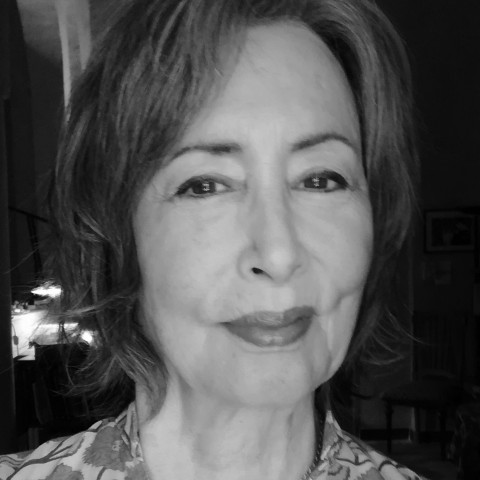
Maria Golia is a long-time resident of Cairo and social commentator for a variety of publications. She is the author of diverse non-fiction books including Cairo: City of Sand, Photography and Egypt, and A Short History of Tomb-Raiding.
More about Maria Golia
Buy the book