News
News > Interview
Rory MacLean's Berlin
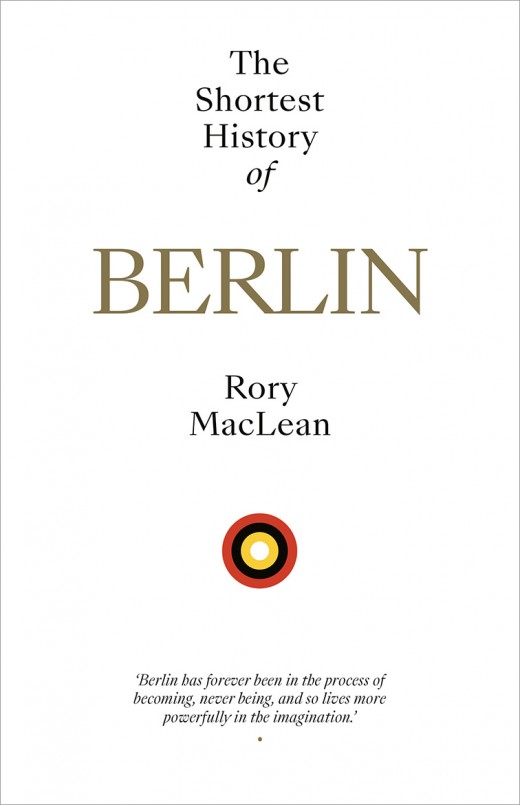
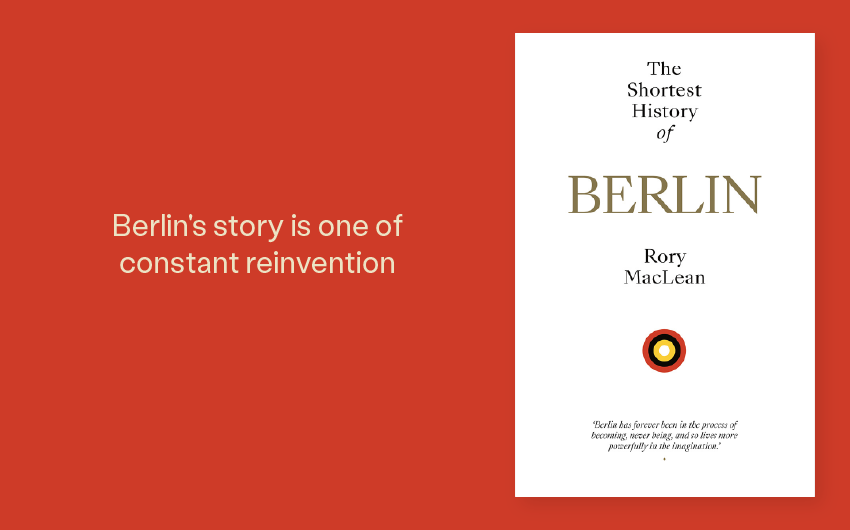
Berlin is a city built and rebuilt, shaped by grand ambitions, devastating ruptures and a restless urge to reinvent itself. Few writers know its layers as intimately as Rory MacLean, author of The Shortest History of Berlin.
We asked MacLean to take us beyond the usual tourist itinerary: where he’d go with just 24 hours in the city, the local places worth seeking out, the moment in Berlin’s cultural history that means the most to him, and one particularly useful lesson learned along the way.
If you only had 24 hours in Berlin, where would you go?
Berlin is a place where men set their dreams in stone, brick or concrete. It forever longed for a noble past yet its youthfulness always spurred it toward the future. My three Must Sees are architectural: Schinkel’s restored Neues Museum which can be read like a book, telling – through its original walls, all-but-lost classical frescos and soaring new spaces – the story of man’s ability to create, destroy and preserve; Daniel Libeskind’s twisted and tortured extension to the Jewish Museum; and the city’s only preserved (and unadorned) stretched of Cold War border fortifications at the Die Gedenkstätte Berliner Mauer on Bernauer Strasse.
What's the best local secret you've come across?
Berlin may be an urban jungle but the city is surrounded by thousands of acres of woods. Krumme Lanke, and nearby Schlachtensee, are quiet, curving lakes encircled by broad, earthen footpaths and sandy beaches from which bathers step down to favourite coves. Only an UBahn ride away, if you can’t make to the edge of town, check out Café am Neuen See, a Seventies glass pavilion dropped into the Tiergarten park in the heart of the old West. Berliners have refined Sunday brunch into the planet’s most relaxing meal with croissants, conversation and contentment, all washed down with litres of strong coffee.
What's your favourite historical moment connected to the city?
No musician has left such an indelible impression on Berlin as David Bowie. In the enclave of West Berlin in 1976, he hung out in clubs, bars and cafés, producing much of three extraordinary albums: Heroes, Low and Lodger. In the last months of his stay, while he finished the ‘Berlin Trilogy’, I spent evenings with him at Café Paris and Hauptstraße 155, the apartment where he lived for two years.
What's the most surprising fact you learned while researching or writing the book?
Not to go to Berghain before 4am. The world capital of Techno, Berghain is a former power station converted into a sensational dance club. The bass beat grips the chest and pounds the body in waves so powerful that – in the second when they stop – you feels like a dust mote floating up into the yawning cavern of the building. All variety of sexual fantasies are indulged here, so bring both an open mind and ear plugs (which are essential and not considered uncool).
The Shortest History of Berlin by Rory MacLean is a vivid journey through the people, ideas and upheavals that have shaped one of the world’s most fascinating cities.
Follow Rory MacLean on Facebook at @rory.wander.maclean and on Instagram and Threads at @rory.maclean.writes.

About the author
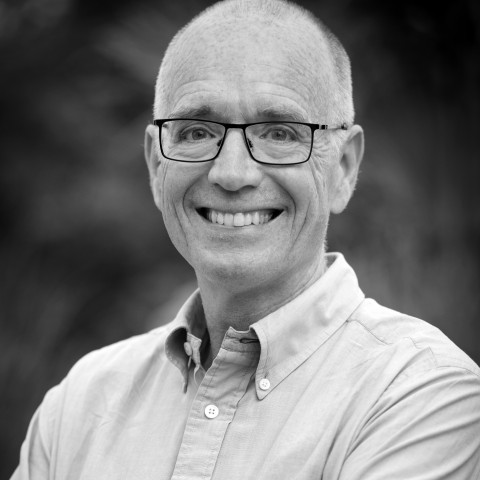
Rory MacLean is the author of more than a dozen books including Stalin's Nose, Under the Dragon and Geography of Heaven: Travels to the Hereafter. He has won awards from the Canada Council and the Arts Council of England as well as a Winston Churchill Travelling Fellowship, and was nominated for the International IMPAC Dublin Literary prize. John le Carré called him 'surely the outstanding, and most indefatigable, traveller-writer of our time'. A Fellow of the Royal Society …
More about Rory MacLean
Buy the book