News
News > Interview
John Zubrzycki’s Delhi
Delhi is a city of extraordinary layers, where centuries of conquest, destruction and rebuilding have left their mark on everything from monumental tombs and mosques to crowded laneways and neighbourhood markets. John Zubrzycki, author of The Shortest History of Delhi, knows those layers better than most.
We asked Zubrzycki how he’d spend just 24 hours in the city, where to escape the crowds, which historical place he returns to, and what surprised him most while writing the book.
If you only had 24 hours in Delhi where would you go?
Arrive as soon as possible after dawn, go to the Jama Masjid (Great Mosque) and climb the northern minaret for an eagle-eyed view of the Old City. Lose yourself in the Old City’s laneways, stopping for a breakfast of piping-hot chai and spicy aloo puri at any hole-in-the-wall eatery, and make your way to the Red Fort before the crowds arrive.
Hop on the metro and head for the Qutb Minar complex and adjacent Mehrauli Archaeological Park. Uber it to the Lota Cafe at the Crafts Museum, then spend the rest of the afternoon at Humayun’s Tomb.
If it’s a Thursday night, don’t miss the Qawwali singers at the Dargah of Nizamuddin just across the road, which go until late into the night.
What's the best local secret you've come across?
Nothing in a city as crowded as Delhi stays a secret for long. But if you're after a relaxing couple of hours in relatively quiet neighbour where you can find interesting shops, pop into a cafe, sample regional cuisines at any number of restaurants, even great gelato and enjoy time browsing through a bookstore, go to Lodhi Colony and the adjacent Meher Chand Market.
What's your favourite historical place connected to the city?
Humayun’s Tomb and the new underground museum, which I consider to be the best in India, top my list. The adjacent Sunder Nursery has more beautiful tombs and mosques, and one could easily spend a whole afternoon wandering around the area’s beautifully landscaped gardens.
It’s best visited in the early morning or late afternoon, when the light brings out the ochres, browns and white marble of the monuments.
What's the most surprising fact you learned while researching or writing the book?
The city's resilience, how it rebuilt itself after being plundered repeatedly, fought over continuously, how it held onto its cultural core even after the retribution the British inflicted on its population following the suppression of the Mutiny. How its poets continued to find beauty even during Delhi's darkest moments.
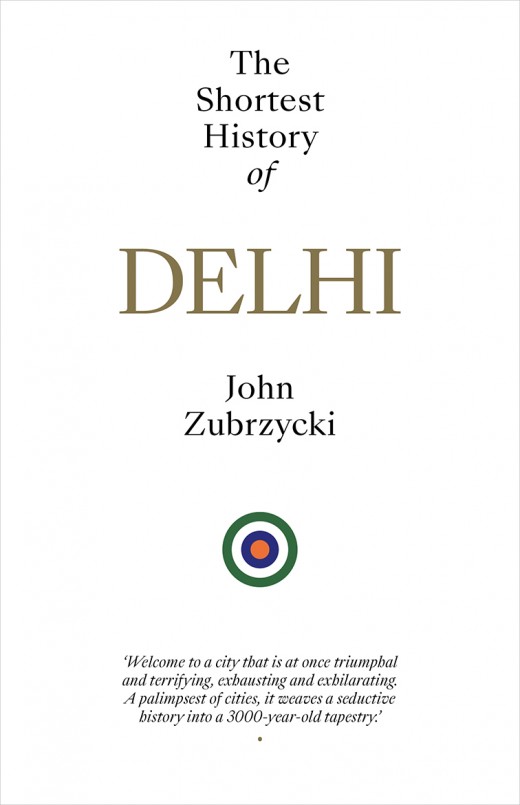
The Shortest History of Delhi by John Zubrzycki traces the remarkable story of a city repeatedly destroyed, rebuilt and reinvented, revealing the people, empires and cultures that have made Delhi what it is today.

About the author

John Zubrzycki is an Australian author with a PhD in Indian history from the University of New South Wales. A former foreign news editor with The Australian, he has worked as a correspondent in India and as a diplomat in New Delhi and Jakarta. He is the author of four books on India, the latest being House of Jaipur: The Inside Story of India’s Most Glamorous Royal Family.
More about John Zubrzycki
Buy the book