News
News > Q&A
A Q&A with Martin McKenzie-Murray, author of Sirens
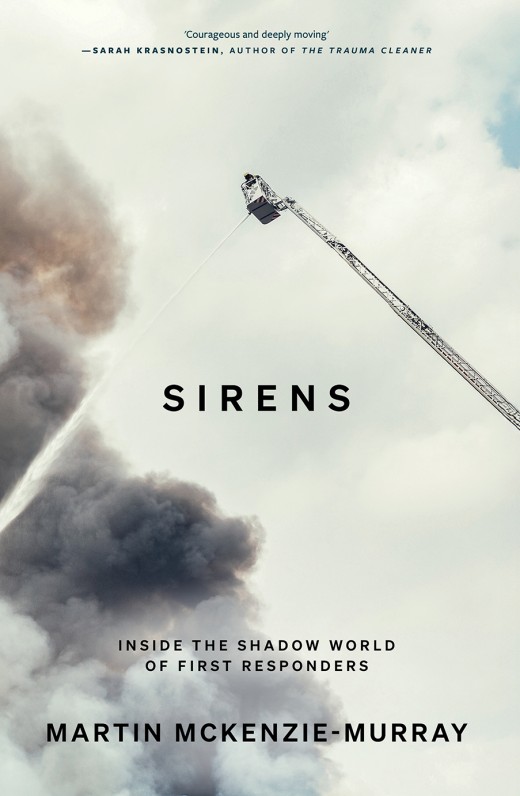
Martin McKenzie-Murray – The Saturday Paper’s associate editor, two-time Walkley finalist and winner of the Melbourne Press Club’s Quill Award – chats with us about his forthcoming book, Sirens: Inside the Shadow World of First Responders, which publishes on 28 April.
What drew you to the idea of writing about first responders?
I’d love to share a fascinating origin story, or some flash of revelation, but the truth is that it was the suggestion of an editor. It wasn’t an idle suggestion, though. Julia had helped edit my first book, a work of non-fiction about a suburban murder, and while I’d reported upon the crime’s investigation and its subsequent prosecution, much of the book was effectively a history of the grief of the victim’s parents.
I spent many hours with them at their home, and enough time had passed since the death of their daughter that they could sketch its different periods. They were unusually articulate about a typically ineffable thing – a depthless pain which was corrupting and disorienting but, eventually, something that became integrated into their psyche and daily lives. But not something that was ever vanquished. Nor will it ever be.
Anyway – I digress. Part of that book involved speaking with police officers, and at the time of writing it I was working in the office of the Chief Commissioner of Victoria Police. Later, in my work for The Saturday Paper, I spent a lot of time interviewing clinically traumatised people – veterans, victims of crime, ex-first responders. Julia thought that I could write well about extraordinary jobs and their commensurate costs and, well, I agreed.
This book explores trauma not only from the professional perspective of first responders, but also in their personal lives. How did you approach writing so intimately about your subjects?
Yes, it’s intimate. As it should be. It’s an intimate thing to deliver a stranger’s child by the side of the road, or to hold someone’s hand as they bleed out. It’s an intimate thing to resuscitate a drowned toddler, or to drape sheets over the bodies of massacre victims. Intimacy, sometimes of an obscenely dark kind, is embedded in the work of first responders. And whole communities, such as Port Arthur’s, can be intimately tethered by their shared knowledge of evil.
As Peter, the paramedic of this book, said to me: “You’re often meeting people on the best day, last day or worst day of their lives.”
The question cleaves the professional from the personal, but there was no such separation for the three subjects of Sirens. Their work affected their personal lives just as it profoundly defined them. This wasn’t a job, or even a career – it was a way of life, a way of thinking about themselves, a way of defying earlier, grimmer assumptions about their own capacities.
So just as intimacy is embedded in their work, I came to feel that intimacy was required in rendering their lives on the page.
How did I approach that? It couldn’t have happened without their trust, their candour, their willingness to thoughtfully disclose all manner of complicated things about themselves and their work. And I’m grateful they did.
Did the book take a different form from what you had initially envisioned?
It sure did. But this seems typical, right? What serious works of non-fiction remain faithful to the author’s first notions of it? Ideally, I’d have thought, the writer’s conceitedness yields to the rougher, unrulier reality that they’re attempting to describe and accepts its contradictions and ugliness.
My original vision was conceived some time ago, and so seems mostly fuzzy and obscure to me now, but I think the initial idea was a broader survey of first responders and trauma and likely an analysis or history of institutional responses to it. It likely would’ve been a drier, less distinctive and more academic work.
But I’m sufficiently wise now to no longer be captive to anything so grand and pompously fixed as My Vision. I know now that the shape of the story and the best way of telling it will emerge not from some lonely conceit of mine but, if I’m a good enough listener, from my conversations with the people I’m writing about.
By this, I don’t mean that they will explicitly influence the book. That way lies hagiography, and I plainly declared and zealously guarded my independence. But I think that if you’re relaxed enough to be flexible, and if you really listen to people, then you’ll eventually intuit the guts of the thing and the best way of formally expressing it.
And so it was. I didn’t begin writing anything until probably nine months into my conversations with the paramedic, Peter, and it was only then that I began to sense what the book’s structure, tone and concerns might be: an intimate rendering of three human beings who did heavy things against heavy odds and, while finding the treasures of pride and self-definition, found some very fucking heavy costs too.
In Sirens, you ask what draws people to these intense professions. Do you now feel any closer to an answer to that question?
About these three particular individuals, yes. More broadly? I have ideas, sure, and there are certain, necessarily recurring temperaments found in these professions – something that I write about, with the help of police psychologists, in the book. But I don’t want to generalise here. Suffice to say that the book, while caring very much about the practical specificity of their work, is ultimately interested in three very distinctive lives. They’re not intended to be avatars for their respective professions, though no doubt they experienced (and share in Sirens) various joys and horrors that will be recognisable to most first responders.
What was the most challenging part of writing this book?
Ah, well. Let me briefly tell you a story. While writing Sirens I received my own diagnosis of PTSD. I hasten to add here that this was not the result of writing this book. My symptoms were something I had long denied, but writing a book about people suffering from it made it increasingly difficult to maintain my denial. Eventually, when the weight of it all finally became intolerable, I sought professional help.
Naturally, this made more difficult something that would have been difficult enough: chronicling human depravity and sorrow.
There was a related but inferior difficulty which was entirely a matter of craft. And that was answering the following questions: should I reflect upon my own experience in this book and, if so, how best to do it in a way that does not smother or gratuitously distract from the stories of Peter, Brett and Tara? I did write about it, after some thought, but whether I satisfied that second question I’ll leave to the reader.
Even though stress, chaos and tragedy are explored as realities of these professions, there are also incredible moments of heroism from these first responders. Was there one particular story that stayed with you?
I’m not being cute here, or obligingly diplomatic, when I say that all of their stories stick to me. How can they not? Peter’s descriptions of Port Arthur in the wake of that historic slaughter, or his role in rescuing the survivors of the Beaconsfield mine collapse, or his delivery and resuscitation of a newborn inside a plane flying through a thunderstorm. And all of this measured against his eventual submission to multiple courses of electro-shock therapy and draining battles with ruthlessly obstructive insurance companies.
Or the ex-copper Brett’s Dickensian childhood, and how it both compelled then haunted his career as a police officer. A career that brought him close to his own death, just as it very nearly compelled his taking the life of another.
Or Tara, the firefighter, who spoke of how one job graphically reminded her – and reanimated – a defining tragedy from her youth? And whose life describes a long and thoughtful struggle to understand the influence of her past – as it does in learning to eventually relax the grip that her occupation held on her self-conception?
And truly, I’m only really scratching the surface here. There’s the “Christmas Angel” and Chernobyl and the tours of Vietnam that Peter’s future therapist, Simon, told me about.
And each of their stories knits with another – I had no interest in writing one more bloodless anthology of war stories. I like to think that real human beings are rendered here, rather than a thin, briefly titillating summary of their professional experiences.
What do you hope readers will take away from Sirens?
I don’t know what readers will leave with – it’s not something I’ve considered. This isn’t a polemical work. What I hope they’ll experience, though, is some serious communion with the life and minds of its three subjects. Can that be enough? Soulful communion with the lives of strangers? I hope so, but I guess we’ll see.

About the author
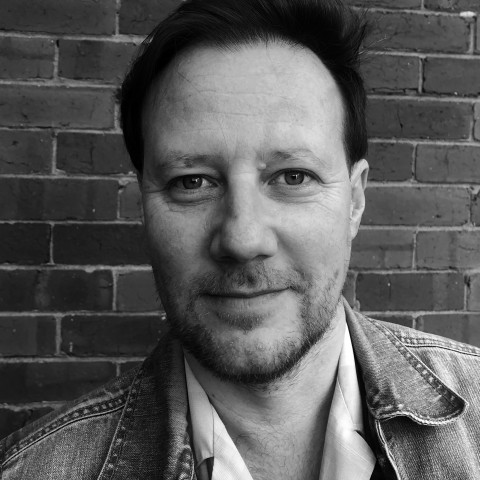
Martin McKenzie-Murray is The Saturday Paper's associate editor and a staff writer for The Monthly. He is a two-time Walkley finalist and winner of the Melbourne Press Club's Quill Award for commentary. He has worked as a teacher, speechwriter, columnist for The Age and adviser to the chief commissioner of Victoria Police. His first book, A Murder Without Motive, was shortlisted for the Ned Kelly Awards for crime writing. His second, The Speechwriter, …
More about Martin McKenzie-Murray
Buy the book